CR12-TDFC Rollformer: Quick Specifications
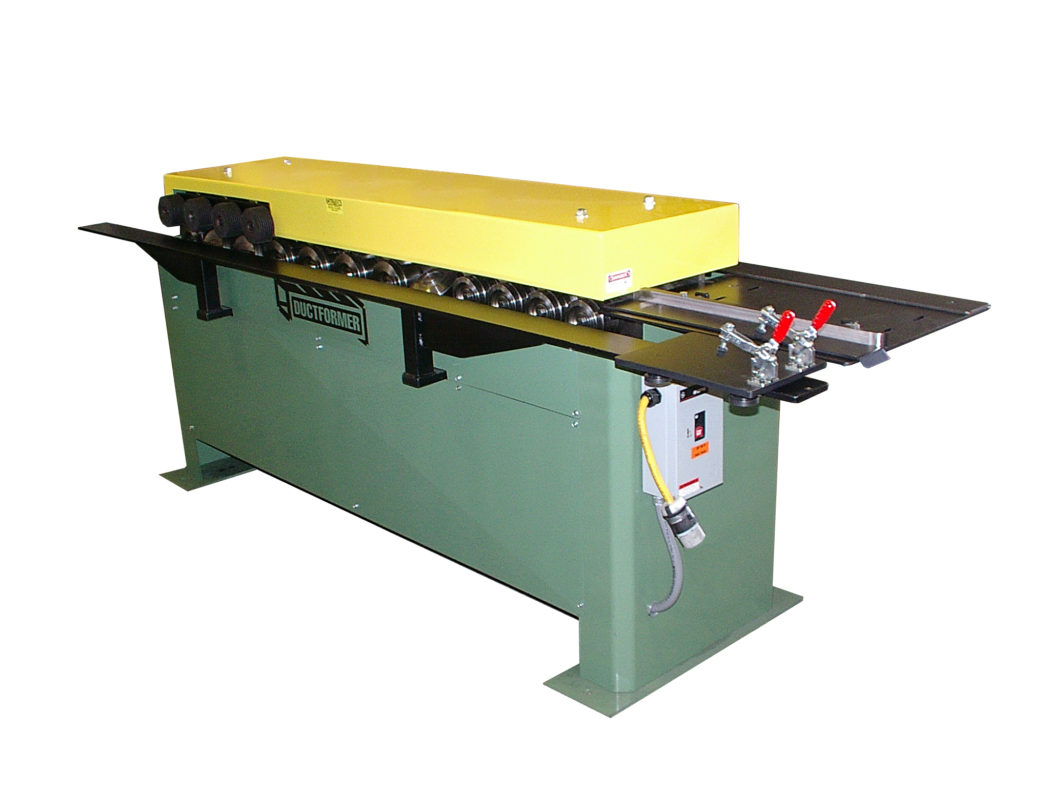
The Ductformer CR12-TDFC is a premium 12-station rollformer specifically designed for HVAC duct flange connectors. By utilizing a 12-station forming process, this sheet metal fabrication machine provides superior profile accuracy and material integrity for TDFC (Transverse Duct Flange Connector) joints, making it the highest-performing alternative machine.
- Precision Advantage: 12-station design allows for a more gradual and accurate “Transverse Duct Connector” profile formation.
- Capacity: Engineered for high-speed production using 16 to 26 gauge galvanized steel.
- System Compatibility: Ideal as a standalone unit or integrated into automated duct lines for high-volume duct beading and edge rolling.
- Build Quality: Features hardened steel rolls and precision-ground shafts for industrial-grade longevity.
CR12-TDFC Rollformer
 CR12-TDFC Rollformer Brochure CR12-TDFC Rollformer BrochureClick Here |
 |
How to Use the Powerful CR12-TDFC Rollformer to Drastically Slash Your Labor Costs
Are you looking for a way to make your shop more efficient? If so, the Ductformer CR12-TDFC Rollformer is a great tool to consider. This machine helps you build ductwork faster and better. In this review, we will look at why it is a top choice for sheet metal workers today.
What Makes This Machine Special?
First of all, this machine creates the TDFC flange directly on the duct. Because of this, you do not need to use bolt-on parts later. This saves you a lot of time and money. Furthermore, the flange is very strong. It adds rigidity to your air duct system, which is very important for commercial jobs.
Key Features and Build Quality
Another great point is that this unit is built in America. It has a heavy steel frame and quality parts. For example, it uses an all-gear drive and an oil bath reducer. Most other machines use belts that can slip. However, this gear system stays smooth and quiet for many years.
In addition, the machine includes a Small Parts Feed Guide. This is a very helpful feature. It clamps small fittings so they do not slip while you work. As a result, your shop stays safer and your parts stay precise.
Why You Should Choose the CR12-TDFC
Why is this rollformer better than the competition? Well, the main reason is efficiency. Because it forms the flange as you go, you skip extra steps in the shop. Consequently, your team can finish jobs much faster.
Moreover, maintenance is very low. Since it uses sealed roller bearings, you do not have to worry about daily oiling. This means you can focus on your work instead of fixing your tools.
Final Verdict
In conclusion, the CR12-TDFC is a solid investment for any HVAC shop. It is tough, reliable, and very easy to use. If you want to grow your business, this machine is a perfect place to start. Therefore, you should check out the specs at Ductformer today to see how it can help you succeed.
CR12-TDFC Rollformer FAQ
What makes the CR12-TDFC maintenance-free?
How does the Infeed Table assist in fabrication?
Are the roll tools produced in-house?
Is the C-Style flange suitable for commercial use?
Efficiency Comparison: TDFC vs. Bolt-On Connectors
| Feature | Ductformer TDFC (Integrated) | Secondary Bolt-On |
|---|---|---|
| Fabrication Step | Single Step (Formed on machine) | Two Steps (Cut & Fasten) |
| Material Cost | Low (Uses parent material) | High (Purchased connectors) |
| Structural Rigidity | Maximum (Seamless construction) | Standard (Fastener dependent) |
| Labor Input | Minimal (Automated forming) | Significant (Manual assembly) |